How to Send Demos to Record Labels in 2026 (The Complete Guide)
Published: May 3, 2026
Sending demos to record labels is one of those things everyone has an opinion about. Some say it's a waste of time. Others say labels only sign artists who already have a following. The truth is somewhere in between, and it's a lot more encouraging than the loudest voices suggest. Labels still sign unknown artists. A&R managers still listen to demos. The difference between a demo that gets heard and one that gets deleted usually comes down to preparation, not talent alone. This guide covers every step: from researching the right labels to writing the email that actually gets opened, plus what to do after you hit send.
Before You Hit Send: 5 Things to Check
Before spending time on a submission, run through this quick checklist. Skipping any of these is the fastest way to get ignored.
| # | Check | Why It Matters |
|---|---|---|
| 1 | Does your sound fit this label? | Labels have a specific sound. Sending techno to a house label wastes everyone's time. |
| 2 | Does the label accept demos? | Many labels explicitly state they don't accept unsolicited demos. Respecting that saves you from being flagged as spam. |
| 3 | Have you checked their recent releases? | Labels evolve. What they released 3 years ago may not reflect what they're signing now. |
| 4 | Do you know their preferred contact method? | Some want email. Others use demo portals. A few prefer SoundCloud private links. Using the wrong channel means your demo never reaches the right person. |
| 5 | Is your own online presence in order? | A&R managers will look you up. A SoundCloud profile with no tracks, or an Instagram with 3 posts, signals you're not ready. |
Does This Label Even Accept Demos?
This is step zero, and it's where most demos die before anyone hears them. Here's the reality: many labels, especially larger ones, cannot legally listen to unsolicited demos. If they did, and your idea happened to resemble something they were already developing, you could claim they stole it. To protect themselves, they destroy unsolicited submissions without listening.
That doesn't mean doors are closed. It means you need to find the right doors.
How to check:
- Visit the label's website. Look for a "Demo," "Submit," or "Contact" page. If they have a process, follow it exactly.
- Check their social media bios. Some labels post their demo submission policy right there.
- Look at their SoundCloud or Bandcamp. If they have a demo drop button, they want to hear from you.
- If you can't find any demo policy, that usually means they don't accept unsolicited demos. In that case, your best move is to build a relationship first: follow the label, share their releases, attend their events, and eventually reach out to an A&R person directly.
The labels that do accept demos are often smaller or mid-sized. They're the ones where your submission actually gets heard by a human being, and that's exactly where you want to start.
Preparing Your Demo Tracks
Full Track or Preview?
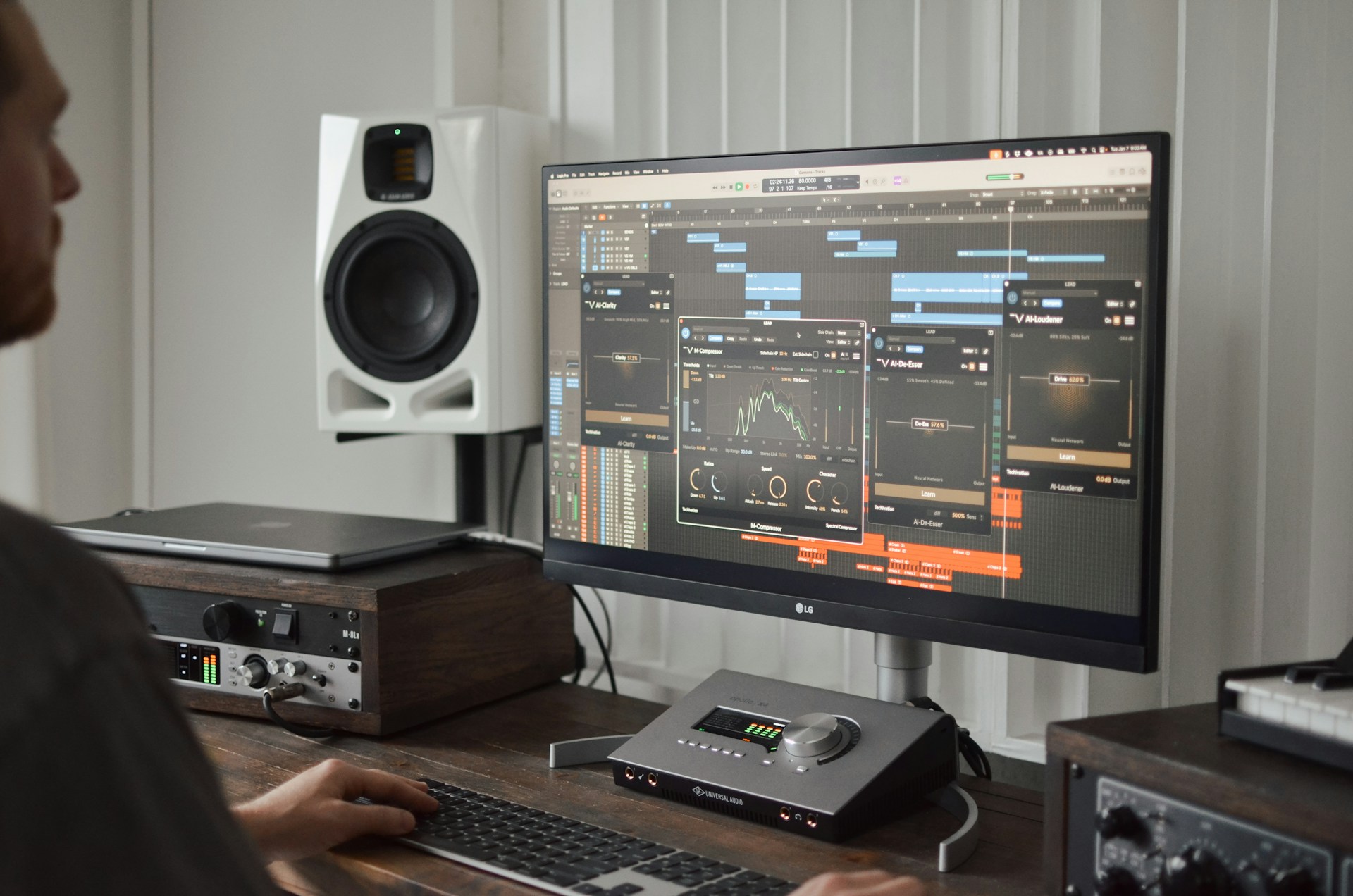
Send the full track. This comes up constantly, and the answer is consistent across A&R managers: they want to hear the complete picture. A 20-second clip might hook them, but a label needs to know the track has a complete structure: an intro, a build, a drop, and an outro. DJs also want to play tracks in a club setting before signing them, and you can't mix a 30-second preview into a set.
And while we're on the subject of completeness: don't send unfinished tracks. Period. A demo is not a rough draft. If you're writing "still needs mixing" or "work in progress" in your email, you're not ready to send it. Would you show up to a job interview and say "my resume still needs editing"? Same energy. Finish the track. Mix it properly. Then send it.
That said, some platforms default to short previews. In those cases, use their format but make sure your clip hits the strongest part of your track. If you're sending via email, always send the full version.
Mixing and Mastering
Here's something most guides won't tell you: labels generally handle mastering themselves. They have internal mastering engineers or work with trusted external studios. The reason is simple. Labels want a cohesive, consistent sound across their catalog. Every release on a label carries that label's sonic identity, and mastering is a big part of how they maintain it.
So nobody expects a Grammy-ready master from your demo. What they do expect is a track that sounds good enough for an A&R person to play it and immediately hear the potential. If the mix is muddy, the levels are all over the place, or the low end is a mess, even a great composition won't survive the first listen. You're not delivering a finished product. You're delivering a strong signal that this track, once properly mastered, could belong on their label.
Think of it this way: your mix needs to be good enough for the A&R person to pass it along to the next person in the room without apologizing for the sound quality. Above-average, clear, and balanced. Not perfect. Just good enough to get a "yes, let's talk" instead of a "next."
Quick mixing checklist:
- No clipping on the master. Your peaks should stay below 0 dB.
- Comparable loudness to other tracks on the label. Match their reference level.
- Clean low end. If the bass is muddy, the whole track sounds amateur.
- Proper stereo width. Keep low frequencies mono, widen highs for impact.
- Remove any long silences at the start or end of the file.
Track Naming Conventions
Name your files properly. This is a small thing that makes a big difference.
Good: ArtistName_TrackTitle_OriginalMix.wav
Bad: final_v3_MASTER2.mp3
If you're sending multiple tracks, number them clearly:
ArtistName_TrackTitle1_OriginalMix.wavArtistName_TrackTitle2_OriginalMix.wav
File Format
- WAV (16-bit or 24-bit, 44.1 kHz) for email submissions when the label requests it
- 320 kbps MP3 as the standard fallback (never send below 320)
- Private SoundCloud link as the preferred method for most labels (more on this below)
Never attach audio files directly to an email. It clogs inboxes and often gets blocked by spam filters.
Your EPK: The One-Page That Opens Doors
An Electronic Press Kit (EPK), sometimes called a one-sheet, is a single-page document that tells a label who you are, what you sound like, and why they should care. Think of it as your artist resume. A good EPK doesn't replace your demo. It gives context that makes your demo stand out from the hundreds of others in the inbox.
What Goes in an EPK
| Section | Details |
|---|---|
| Artist name | Your stage name, exactly as it appears on your releases |
| Photo | One high-quality press photo. Not a selfie. |
| Bio | 3-4 sentences about who you are and what you sound like. Not your life story. |
| Genre and style | Be specific. "Melodic techno with progressive house elements" beats "electronic music." |
| Notable releases | If you have them. Stream counts, chart positions, or support from known DJs. |
| Supporting evidence | Video of a DJ playing your track, radio show features, festival bookings. Anything that proves your music connects with real listeners. |
| No fluff | Skip "my friend said this is a banger" or name-dropping people who haven't actually supported you. Labels fact-check. Keep it real. |
| Social links | Spotify, SoundCloud, Instagram, and any other relevant profiles |
| Contact info | Email address where you actually respond |
PDF Best Practices
Send your EPK as a PDF. It's universal, it looks the same on every device, and it won't get flagged by spam filters the way .docx files sometimes do.
Keep the file size under 5 MB. A&R managers download demos on phones, in airports, between sets. A 25 MB PDF is getting deleted before it opens. If your PDF is too large, you can compress, split, or merge PDF files for free at pdf-safe.com — it's a straightforward tool with no ads and no signup required.
Design tips: use a clean layout, legible fonts, and white space. Your EPK should be scannable in under 10 seconds. If it takes longer than that, cut something.
Supporting Evidence: Let the Track Do the Talking (But Bring Receipts)
If you have proof that your music works in the real world, include it. A video of a DJ playing your track at a club. A screenshot of your song featured on a radio show. A clip from a festival set where the crowd actually responds. These aren't just flexes. They're signals to the label that your music doesn't just sound good in headphones. It moves people in a room.
Labels love a track that already has traction. A song that a known DJ has played, that's been featured on a radio show, or that's gotten genuine attention at a festival is a safer bet than a great track sitting in a vacuum. If you have any of this, put it front and center in your EPK or demo email.
But a quick word of caution: don't fabricate support. If you say "supported by [big DJ name]" and that DJ has never actually played your track, someone will find out. And "my friend told me this is a banger" doesn't count as industry support, no matter how much you trust your friend's taste. Stick to verifiable facts. If you don't have DJ support yet, that's fine. The music still speaks for itself. Just don't pad your EPK with noise.
Where to Send Your Demo
Still the most common submission method for many labels. Find the official demo email on the label's website (not their personal social media DMs). When labels say "send your demo to demos@labelname.com," that's an invitation. Use it.
SoundCloud Private Links
This is the preferred method for a growing number of labels, and it has several advantages:
- One click to listen. The A&R person clicks and hears your track immediately. No downloading, no extracting ZIP files.
- They can check your profile. If they like your demo, they'll browse your other uploads. Make sure your SoundCloud looks professional.
- You control access. Private tracks stay hidden until you share the link. Labels want exclusive material, not something that's already public.
Send with intention, not volume. Don't upload 15 tracks and blast the same SoundCloud link to 30 labels. A&R managers can tell when a demo is mass-sent. It's obvious, and it signals that you haven't taken the time to figure out whether your sound actually fits their label. Instead, pick your 2 to 4 strongest tracks, send them exclusively to one label at a time, and wait for a response before moving on. This approach respects the label's time and shows that you've genuinely considered whether your music belongs on their roster.
SoundCloud submission checklist:
- Upload as a private track. Never send a link to a public upload.
- Use the "Share" button and copy the private share link (the one with random digits at the end). A regular browser URL won't work for anyone but you.
- Enable downloads. This one matters more than most people realize. Many labels expect the download option to be active on SoundCloud demos. A&R managers often want to play your track in a club, on their phone, or in the studio on different monitors. If they can't download it, they might move on to the next submission. Don't lose a potential deal because of a settings toggle.
- Name your track properly on SoundCloud: "ArtistName - TrackTitle (Original Mix)."
- Add a brief description in the track's description field.
- Be patient and respectful. You sent your music. Now you wait. Sending follow-up messages on SoundCloud, Instagram, and email within the same week makes you look desperate, not passionate.
Demo Submission Platforms
Some labels use platforms like LabelRadar or Trackstack for demo submissions. If a label directs you to one of these, use it. Don't try to bypass their process by emailing directly. That signals you don't follow instructions.
In-Person Networking
The most effective method, and the one most people skip. Meeting someone at a show, a conference, or even a record store creates a connection that a cold email never will. If you can get a personal introduction to someone at a label, your demo goes from the bottom of a 200-email pile to the top of someone's listening queue.
This doesn't mean ambushing A&R managers at clubs. It means building genuine connections within the scene. Go to events. Support releases you genuinely like. Be part of the community. The introductions follow naturally.
The Demo Email Template
Here's a template that covers the essentials without overcomplicating things. Copy it, adapt it, and make it your own.
Subject: Demo Submission — [Your Artist Name] — [Genre]
Hi [Label Name] team,
I'm [Your Artist Name], a [genre] producer based in [Your City/Country]. I've been following your releases for a while, and [specific release or artist on their roster] really resonates with the direction I'm working in.
I'd like to submit [Track Count] tracks for your consideration:
[Private SoundCloud link or download link]
A bit about me: [1-2 sentences about your background, any notable releases, or support from DJs/press]. You can find more of my work at [Spotify/SoundCloud link].
Thanks for your time. I'd love to hear your thoughts, even if it's a pass.
Best,
[Your Name]
[Your Artist Name]
[Website or primary social link]
What works in this template:
- It names the label specifically. No mass emails.
- It references a specific release. This shows you've done your research.
- It's short. Under 10 sentences. A&R managers scan, they don't read essays.
- It includes a direct link to your demo. One click.
- It mentions your social profiles. This lets them check your presence quickly.
- It's polite without being desperate. Confidence, not pleading.
After You Send: What to Expect
Timeline
Most labels take 2 to 4 weeks to respond to demos. Some take longer. A&R managers are often working artists with touring schedules, production deadlines, and their own creative work. A slow response doesn't mean they hate your music. It means they're busy.
When to Follow Up
Wait at least 2 weeks before following up. One follow-up email is reasonable. Two is pushing it. If they don't respond after that, move on. Silence is its own kind of answer, and it doesn't mean your music is bad. It means they have limited capacity and other priorities.
How to Handle Rejection
If you get a "no," that's actually a good thing. It means someone listened. Most submissions get no response at all. A rejection means you're in the conversation. Some labels even give feedback with their rejection. Take it seriously. It's free advice from someone who listens to demos for a living.
If the feedback is "not right for us right now," that's not about quality. It's about fit. Try another label with a sound closer to yours.
Here's the thing about rejection: don't take it personally. You're making music, not filling out tax forms. Even with the right sound and the right label, things don't always click. A demo can get lost in an inbox. An A&R manager might have had a rough week and skipped something they'd normally love. It happens. Your track isn't ruined because one person didn't reply. Save it for another label, or another time, or release it yourself.
And honestly? The landscape is a bit paradoxical right now. Music production has never been more accessible, which means everyone and their neighbor is making tracks. That makes standing out harder. But it also means you have tools and distribution that didn't exist 10 years ago. You don't need anyone's permission to release your music anymore. Sending demos got harder because there's more competition, but building a career on your own terms got easier. Don't let one silence convince you otherwise.
7 Mistakes That Get Your Demo Deleted
| # | Mistake | Why It Fails | What to Do Instead |
|---|---|---|---|
| 1 | Mass emailing every label | It's obvious. A&R managers can tell instantly. | Personalize each email. Name the label. Reference a specific release. |
| 2 | Sending unfinished tracks | A demo isn't a rough draft. If it still "needs mixing," it's not ready. | Only send tracks you're proud of. Fully mixed, properly leveled. No "work in progress" labels. |
| 3 | Attaching large files to email | Clogs inboxes. Often blocked by spam filters. | Use private SoundCloud links or cloud storage links. |
| 4 | Writing a novel-length email | A&R managers scan. Long emails get skipped. | Keep it under 10 sentences. Short intro, track link, one key fact about you. |
| 5 | Sending music to the wrong genre | The fastest way to get ignored. | Listen to the label's last 5 releases. If your track doesn't fit, find a different label. |
| 6 | No online presence | A&R will Google you. Nothing there = not serious. | Have at least a SoundCloud profile with public tracks and an active social account. |
| 7 | Following up aggressively | Daily emails or DMs will get you blocked. | Wait 2 weeks, send one polite follow-up, then move on. |
Should You Even Wait for a Label?
Here's the honest answer: you don't need a label to release music. The tools for independent release are better than ever, and many artists build their entire careers without signing to anyone.
What self-releasing gives you:
- Full ownership of your masters and publishing
- Creative control over every release
- All the revenue (after distribution fees)
- No waiting for label schedules or A&R approval
What a label gives you:
- Established audience and distribution reach
- Professional mastering and artwork resources
- Playlist pitching and industry connections
- Marketing budget and promotional support
Neither path is better. They're different strategies for different stages. If you're just starting out, self-releasing is often the faster way to build momentum. You learn what works, you develop your sound, and you start accumulating streams and followers. That data makes you more attractive to labels later.
The artists who get signed aren't usually the ones who waited the longest. They're the ones who kept releasing, kept improving, and made themselves impossible to ignore. Build your audience. Make great music. The labels will notice.